Rydberg Atom Receivers Use Satellite Doppler Shift as a Built-In Local Oscillator
By Breadboardhub Staff · Published 2026-07-13
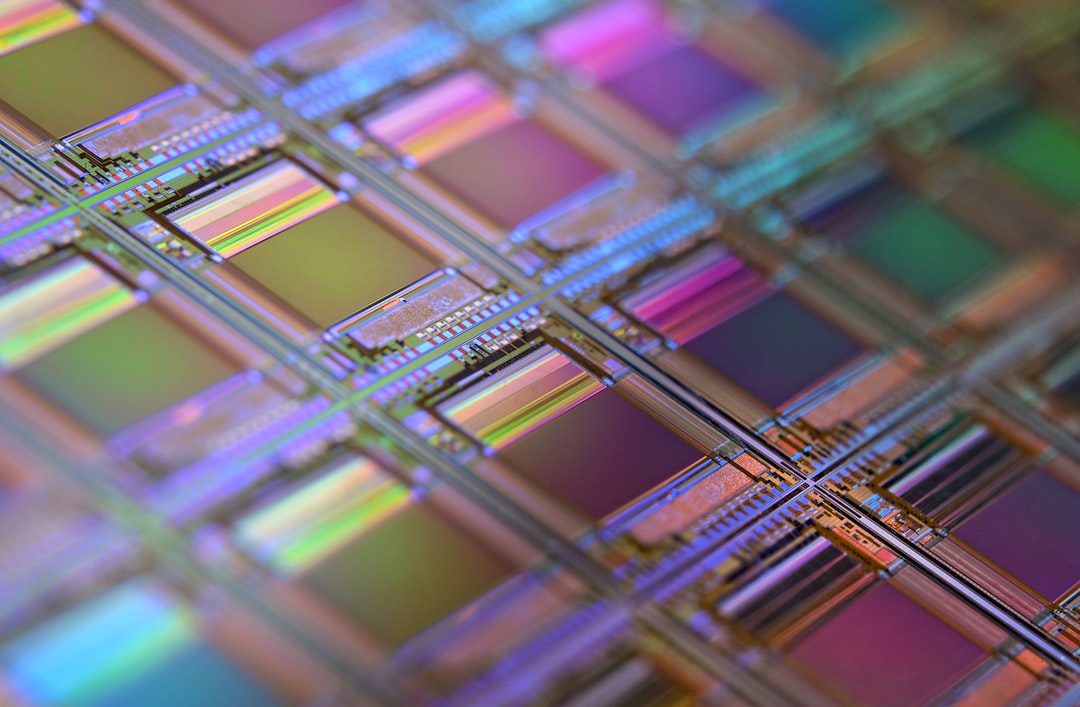
Photo by Laura Ockel on Unsplash
A new receiver architecture built around Rydberg atom vapor cells could change how satellite uplink signals are detected, by turning the Doppler frequency shift caused by an orbiting satellite into a useful intermediate-frequency signal rather than a problem to correct. The approach eliminates the need for a conventional external local oscillator, and lets the receiver shape its own channel response in the analog domain. For engineers interested in next-generation RF front ends, this represents a genuinely different way of thinking about signal reception.
What Is the Core Finding?
The researchers demonstrate that the Doppler shift a satellite naturally produces as it moves across the sky can drive a self-superheterodyne detection scheme inside Rydberg atom cells, removing the requirement for a separate oscillator source while still producing a clean intermediate-frequency output.
A classic superheterodyne receiver mixes an incoming RF signal with a local oscillator to produce a lower intermediate frequency that is easier to process. In Rydberg-based receivers, the atom transitions between energy levels are sensitive to electric fields, so an incoming RF signal modulates the optical transmission through the vapor. Normally you still need a reference field acting as the local oscillator. Here, the satellite's own motion creates a frequency offset that fills that role automatically, which the team calls a self-superheterodyne architecture.
The key insight is that the intermediate frequency (IF) generated this way is not just a passive byproduct. The team shows it can be actively shaped by controlling the amplitude and phase of a programmable near-field LO field applied across the array of vapor cells, giving the receiver a tunable analog channel-shaping capability without adding conventional RF mixing hardware.
How Does It Work Technically?
The receiver is built as a Rydberg uniform array, meaning multiple vapor cells arranged in a regular grid. Each cell converts an incoming RF signal into an optical signal through a process called electromagnetically induced transparency (EIT), where the presence of an RF field shifts the absorption spectrum of the atoms in a measurable way.
The researchers derive a closed-form model for how the RF signal from the satellite maps to an optical response at each individual cell, accounting for the spatially varying field of the programmable local oscillator across the array. They call this a vapor-cell-center approximation, which simplifies the geometry enough to get an explicit analytical expression linking the satellite signal to the cell-level output. This model reveals that each cell has its own transduction gain and phase response, both of which depend on the LO configuration.
With that model in hand, they set up an optimization problem: choose the LO amplitudes and phases to maximize the Shannon capacity of the effective channel seen by the full array. The solver adjusts the LO to reshape the beam pattern, improve alignment with the satellite geometry, and reduce interference between simultaneous users. Simulations confirm the optimized LO configuration delivers meaningfully higher achievable capacity than baseline schemes.
What Does This Mean for Embedded and RF Engineers?
Most of this work lives at the physics and communications theory layer, but the architectural implications are practical. Rydberg receivers are being explored as wideband RF sensors that can cover frequencies from megahertz to terahertz with a single physical platform, something no traditional semiconductor front end can match. If satellite Doppler shifts can substitute for a hardware local oscillator, that removes one of the more awkward integration challenges when building these systems.
The idea of using the LO field as a programmable analog beamforming layer is also interesting from a systems design perspective. Rather than doing all channel equalization in the digital domain after an ADC, the Rydberg array physically reshapes what it receives before any digitization happens. That could reduce processing load downstream and improve dynamic range in scenarios with multiple simultaneous satellite signals.
What Are the Current Limits?
The work is a simulation and theoretical modeling study at this stage. The vapor-cell-center approximation simplifies the spatial field distribution, so real hardware with cells of finite size will introduce additional effects not fully captured by the model. Rydberg receiver hardware itself is still largely a laboratory technology, requiring laser systems and vacuum-sealed cells that are far from the compact modules an embedded engineer can drop onto a PCB today.
The analysis also assumes the Doppler shift from the satellite is stable and predictable enough to act as a reliable IF source, which holds for well-characterized orbits but adds a dependency on accurate orbital knowledge in the receiver design.
As Rydberg atom receiver hardware matures toward practical modules, architectures like this one that reduce external hardware dependencies will likely become the starting point for real satellite ground terminal designs.
Attribution
Adapted from “Cell-Level Channel Shaping for Rydberg Atomic Quantum Receivers in Satellite Uplinks With Doppler-Enabled Superheterodyne Reception” by Qihao Peng, Qu Luo, Kezhi Wang, Cunhua Pan, Pei Xiao, Trung Q. Duong, Jiangzhou Wang, licensed under CC BY 4.0 (https://creativecommons.org/licenses/by/4.0/). Source: https://arxiv.org/abs/2607.05979.
Original arXiv papers: